N Seoul Tower, explained
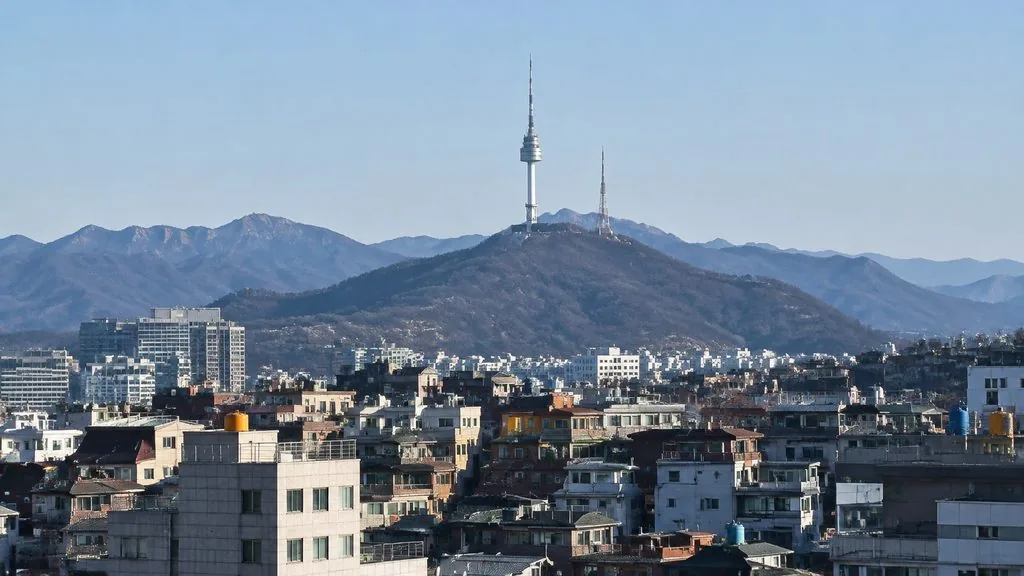
The summit plaza, the love-lock terraces and every outdoor view over Seoul are free. The ticket buys the enclosed decks and the open-air deck above them — roughly 130 metres of extra height, behind glass on three of the four levels. Whether that is worth paying for is decided almost entirely by the air, not by the price: on a clear evening it is a good buy, on a hazy afternoon the free terraces outside beat it. Getting up the hill is a separate decision again, and the ₩1,100 shuttle bus beats the cable car queue more often than anyone in that queue realises.
N Seoul Tower is a broadcast tower on the summit of Namsan, a wooded hill of about 243 m in the middle of Seoul, and the part of it most visitors have come to see — the plaza, the love-lock terraces and the view over the city — is free and open to anyone who gets up the hill, while the ticketed observation decks sit roughly another 130 m above that, behind glass.
I am Yun-seo Baek. I moved from Daegu to a fourth-floor walk-up in Huam-dong, on the south side of the hill, in 2015, and I have walked some version of Namsan several times a week since. I am not a guide and I do not work in tourism. I have watched the same queue form at the same cable car station every Saturday for a decade, and I have opinions about it.
Why the tower is on that hill
Because the hill was the tall thing available. The structure was finished in August 1975 and opened to the public in October 1980, built to transmit broadcast signals over the city, which it still does. In 2005 the concessionaire running the observation and restaurant levels rebranded it N Seoul Tower. The N is a marketing letter, usually explained as standing for “new” and for Namsan, with no authoritative expansion behind it. Namsan Tower, Namsan Seoul Tower and N Seoul Tower are the same building; Namsan is the hill it stands on, and that is the confusion I hear most — settled properly here. Inside, the levels run T1 to T7: ticketing and shops at the bottom, enclosed decks at T4 and T5, an open-air deck at T6, a slowly rotating restaurant at T7.
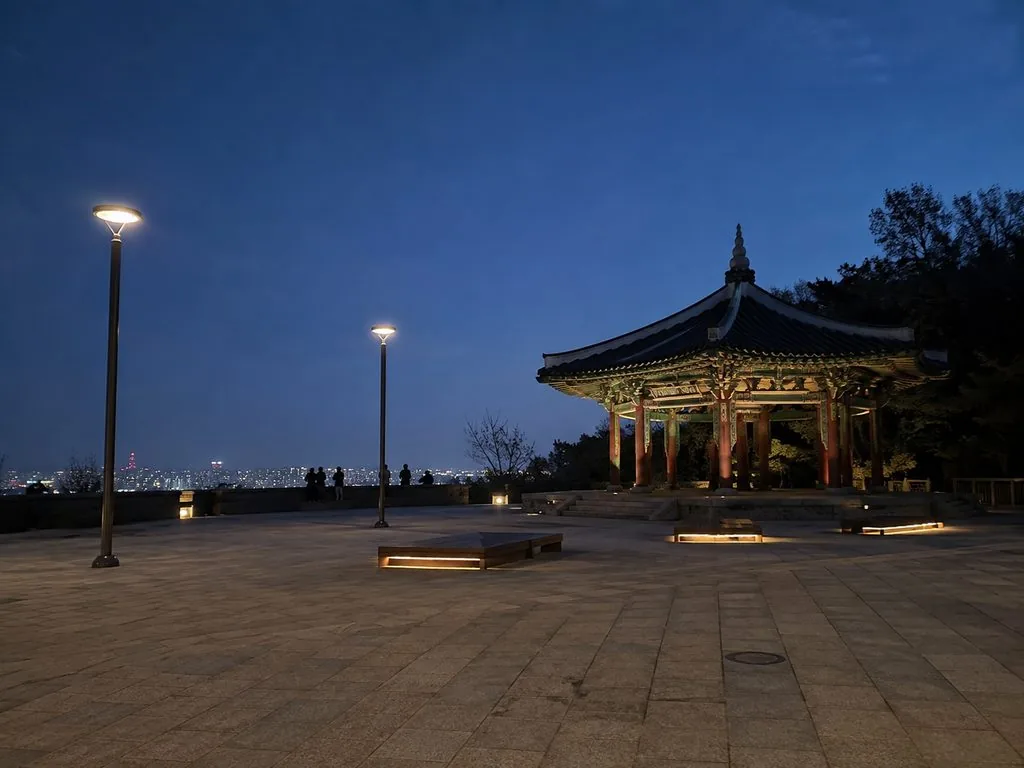
The free part is larger than people think
The split, plainly. Free, always, with no ticket: the summit plaza, the love-lock terraces, the Palgakjeong pavilion area, the whole of Namsan Park and every viewpoint outside the tower’s paid levels. Ticketed: the observation decks, and nothing else. The padlocks began appearing on the railings around 2006, were adopted as an attraction in 2007, and by 2018 the accumulated weight had been assessed at 82 tonnes; attaching one costs nothing beyond the price of the lock, and the key-deposit boxes are on the plaza — what is free and how the locks work.
Three ways up, and the one nobody uses
The cable car has run since 1962 and the ride takes about three minutes. The ride is never the problem. The base station is on Sopa-ro, 10 to 15 minutes uphill from Myeongdong Station on a street steeper than it looks, with a public outdoor lift partway up that most people walk straight past. At sunset the queue can run very long; multi-hour waits get reported at peak times. And it does not deliver you to the tower — there is still a short climb or an escalator run at the top.
Meanwhile the Namsan Sunhwan circular bus, route 01, runs small green buses on 01A and 01B branches every 7 to 10 minutes, roughly half past six in the morning until eleven at night, connecting officially from Chungmuro Station on lines 3 and 4 and Dongguk University Station on line 3. It costs a small flat fare with transfers allowed and stops close to the tower base. Cheapest way up, usually the fastest, and I would guess most of the queue below it does not know it exists. If this page does one useful thing, let it be that, weighed against what the cable car is actually like.
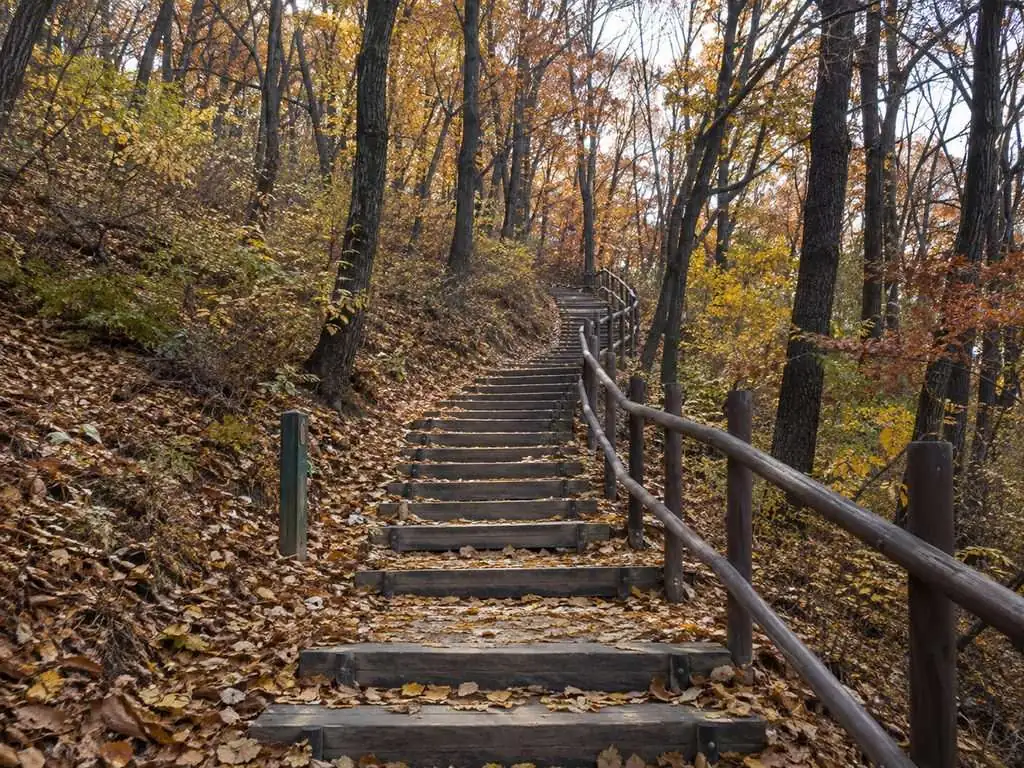
Then there is walking, which is what I do. From Myeongdong via the Hoehyeon side it is 20 to 25 minutes uphill on made paths and stairs; from the Itaewon side, 30 to 40. The trails are well kept and the main routes are lit after dark. Coming down is faster than going up, so if you only walk one direction, walk that one — routes and times.
The glass problem
This decides whether the ticket is money well spent. Seoul gets significant haze and fine-dust days, worst in spring, and on one of those you pay for height and get a window: the glass on the enclosed decks reflects the interior lighting and the shop displays back at you, and the distance you bought is not there. The free terraces below have nothing between you and the city, which is why on a marginal day they beat the paid deck outright. Check the air quality before you commit. If I could put one sentence on this site it would be that one — longer version on the worth-it page.
When the ticket is worth buying
On a clear evening, without hesitation. Arrive about 40 minutes before sunset and one visit gives you daylight, the sunset and the lit skyline — day against night. Winter often carries the clearest air of the year, and the summit is meaningfully colder and windier than street level, so bring a layer. Then check what you are buying. A guided day tour including the round-trip cable car and observatory admission can cost less than the online ticket covering those same two items alone, while the most-reviewed day tour here includes the cable car and leaves the observatory out entirely — all six compared and what a visit costs.
What I actually do
I walk up from Huam-dong, or the long way round from Itaewon when I want the sunset on the way back down, and most of the time I do not go up the tower. That is a local’s answer and I know it: I can come back next Tuesday and you cannot. If you have flown a long way and the air is clear, go up. If it is hazy, keep the money and spend it on dinner in Myeongdong or Itaewon, which is better food and better value than anything at the top — the rest of the practical detail is in the tickets themselves.
Ready to pick a ticket?
If you have read this far you already know which of the three questions applies to you. If it is simply which one do I buy, the short answer is that a guided day tour including the deck can cost less than the ticket-and-cable-car bundle on its own — the numbers are on the prices page and the products are lined up side by side on the comparison.
Frequently asked questions
Do I need a ticket to reach the top of Namsan?
No. The hill, the summit plaza, the love-lock terraces and the outdoor viewpoints are public and free at any hour. A ticket is only needed for the tower’s enclosed observation decks and the open-air deck above them. What’s free and what isn’t sets out the split in full.
What is the cheapest way to get up the hill?
The Namsan Sunhwan shuttle bus No. 01, at ₩1,100 with a transit card. It runs every 7 to 10 minutes and drives up to the tower base, which is why it usually beats the cable car at sunset even though the cable car looks like the faster option. The bus route in detail, or all three ways compared.
Is the observatory worth it at night?
On a clear night, yes — the lit city from the enclosed decks is the view people book for. On a hazy one the interior lighting reflects off the glass and you see the shop behind you as much as the skyline. Arriving about 40 minutes before sunset gets you daylight, sunset and the lit city in a single visit. Day or night, decided.